Our Health Matters: A Conversation About Anal Cancer
This is a safe space for our community to talk openly about our health. We want to have a clear and honest conversation about anal cancer, what it means for people living with HIV, and how we can look after ourselves and each other.
Anal cancer is a rare type of cancer that affects the anus. In the UK, around 1,500 people are diagnosed each year.
The anus connects your bowel to the outside of your body (the bottom). Anal cancer can start in any part of the anus.
Why this is our conversation
For people living with HIV, the risk of anal cancer is higher than average. In Black communities, cancers are often diagnosed at a later stage, which makes treatment harder¹. For example, Black African and Black Caribbean women are more likely to be diagnosed with anal cancer at a younger age and later stage².
For too long, conversations about anal health have been filled with stigma and judgement. Let’s be clear:
· Anal cancer is not a “gay men’s disease”; it affects people of all genders and sexualities.
· It is not a direct result of sexual activity or being “unclean”. Most anal cancers are caused by human papillomavirus (HPV), a very common group of viruses. Most people affected by HPV will not develop cancer.
· Having a conversation about cancer is the first step to empowering the community and removing stigma.
Let’s talk about anal health
Talking about our bums can feel awkward, but it’s an important part of our health. We need to normalise these conversations so we can spot when something isn’t right.
The message is simple: be aware of symptoms and take control of your own health. Early detection is key.
If you notice any of these signs, visit your doctor:
· Bleeding from your backside or unusual discharge.
· Itching, pain, or discomfort that doesn’t go away.
· Any new lumps, bumps, or skin changes around the anus.
· A feeling of pressure when sitting.
· Needing to poo more often or straining.
Anal cancer symptoms can sometimes look like piles, haemorrhoids, or anal warts. If you’re not sure, it’s important to get checked so nothing is missed.
Hear from Jide Macaulay and Dr Olu Obadina, who joined forces to talk about understanding anal cancer, the risks within Black communities living with HIV, and what people should do next.
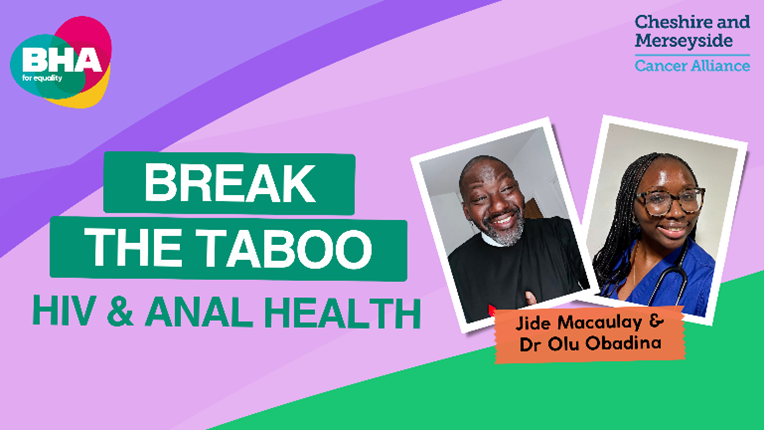
Listen on Spotify: Break the Taboo: HIV & Anal Health – BHA for Equality Spotify
Listen on Radio Africana: Break the Taboo: HIV & Anal Health – Radio Africana
For more information on the symptoms, diagnosis and treatment, visit: NHS Anal Cancer
Getting tested for anal cancer
If you experience any of the symptoms above, don’t wait – contact your GP, HIV clinic, or sexual health service. They can check your symptoms and may suggest further tests. Early tests can make all the difference.
This may involve a physical examination of your anus and back passage.
They might also give you a simple home test called a FIT (Faecal Immunochemical Test), which looks for tiny amounts of blood in your poo, that are too small to see.
You can do this yourself at home by collecting a very small sample of poo on a collection stick and putting it in a sample tube. These are available at all HIV and Sexual Health clinics in the area of Cheshire and Merseyside.
Reducing risk
You cannot always prevent anal cancer, but a HPV vaccination is one of the best ways to protect yourself.
It helps protect against cancers caused by HPV, as well as genital warts.
The HPV vaccine is recommended for high-risk groups, including:
· People living with HIV.
· Men aged 45 years old and under who have sex with men.
· Trans men and trans women aged 45 years old and under, if their risk of getting HPV is the same as men who have sex with men.
· Sex workers.
There are also healthy changes you can make to lower your chances of getting anal cancer, including:
· Use condoms during sex to lower your risk of getting HPV.
· Keep sex toys clean and do not share them.
· Try to quit smoking.
For more information on HPV visit: NHS HPV
Support
BHA for Equality provides HIV prevention and testing services in Greater Manchester and Liverpool as part of the PaSH partnership, where support for people living with HIV is delivered by George House Trust. BHA for Equality offers dedicated support for people living with HIV in Leeds. To visit George House Trust, please click here.
For more trusted health information from our partners on this campaign, visit:
Anal cancer – what you need to know :: Cheshire & Merseyside Cancer Alliance
Support groups are available, and these include:
· Bottom Line was formed by people with lived experience of anal cancer, and their voices are at the heart of all they do. Their friendly online support group is a place you can share your story, hear how others are living with the disease or just chat about the day-to-day experience of living, or caring for someone, with anal cancer. To visit, please click here.
· Calabash project is an initiative designed to provide an environment for African men living with HIV to support each other and share experiences and ideas around issues raised by living with HIV. To visit, please click here.
References:
1. Black women more likely to be diagnosed with late-stage cancer